I
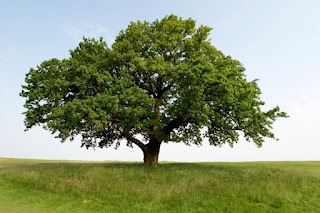
have always been fascinated with trees. Ever since I was young, I loved to
climb and play in them. I would observe them and marvel at the many types I
would find throughout the world. I loved how they were strong and impossible to
move. I’ve noticed how trees have been symbols in stories: a tree in a
courtyard in Lord of the Rings symbolized the strength of a weakened kingdom. The
Giving Tree taught me my first lesson of being selfless. Trees have many
characteristics that I’ve tried to have in my life.
Showing posts with label By Dallin Rahlf. Show all posts
Showing posts with label By Dallin Rahlf. Show all posts
Monday, April 30, 2018

Wednesday, April 4, 2018
Complex Yet Simple Poetry

I see a poem that is a simple "ABAB" format and looks like and the lines are even similar in length and I think, "Yes, this is a poem for me. No gimmicks. Nothing weird. Just a nice, simple, ham-and-cheese poem." Seeing a poem like "Ars Poetica" can make me nervous.
A part of me doesn't even like these kinds of poem. I think to myself, "Why? Why make something that could be so simple and clean so confusing and weird?" I get turned off and don't even feel like reading it. This is unfair to these kinds of poems. When I took the time to read "Ars Poetica" and try to dissect it (which I am terrible at), I felt better about it, and was excited to try this with other poems. I'll use this poem and maybe another from the reading to show how learning to look at the form, context, and the 5 some other things we learned to do, while intimidating, is simple and makes all other poems great.
A lot of things can be taken in this kind of light. I love sports. I have played football for nearly 13 years of my life, and I would like to think I know it pretty well. When I watch a game, I see these small details on the field. I see how the offensive lineman react to the defense- blitzes, shifts, formations, etc. I see the quarterback look off the safety to free up the tight end running a quick post. These sort of details, while not needed to enjoy football, make it that much more amazing to me. I believe this same thing should be used in poetry.
Monday, March 26, 2018
Picking Apart a Poem
Here are some of my notes and annotations
concerning “Ars Poetica”
A poem should be palpable and
mute
As a globed fruit, (Here is our first example of
the common rhyme pattern for the poem.)
(Does this mean that a poem should be easily
peeled?- As in, it should be something that someone could pick apart and
discover?)
Dumb
As old medallions to the thumb,
(Not super sure what this means. I wonder if the
author means dumb as in stupid or dumb as in speechless.)
Silent as the sleeve-worn stone (Here is the
first example of the alliteration he uses in his comparisons.)
Of casement ledges where the moss has grown—
A poem should be wordless
As the flight of birds.
(I like this one. Wordless could mean many
things, but I would think it stands as “don’t add fluff to your poem, and don’t
write things just to write things. Everything should have a purpose.”)
A poem should be motionless in
time
As the moon climbs,
Leaving, as the moon releases
Twig by twig the night-entangled trees,
Leaving, as the moon behind the winter
leaves,
Memory by memory the mind—
A poem should be motionless in
time
As the moon climbs.
(These four stanzas take part in the longest
example of what a poem should be. I wonder if he means that poems should be
something in which should take our time reading. It’s almost as if, when we
read poetry, time around us stops. If we read a poem the right way, the world,
time, problems, worries, and struggles around us halt, and in these moments, we
lose ourselves to the writings.)
A poem should be equal to:
Not true.
(This stanza throws me off my trail. This whole
time he has been saying what poems should equal to more or less, so what does
that author mean by this line?)
For all the history of grief
An empty doorway and a maple leaf.
(An empty doorway- a chance to start new?)
For love
The leaning grasses and two lights above the
sea—
(I feel like the two lights above the sea refer
to the sun and the moon- two constant things above the sea, just as love is
constant.)
A poem should not mean
But be.
(I would think that this is his main point of
what poetry should do for someone. A poem shouldn’t be casually written or
read, but it should be taken seriously, appreciated, inspiring. A poem should
live within the heart of both writer and reader.)
Policy claim: Ars Poetica should inspire the
reader to have a different view of what poetry is.
Definition claim: Ars Poetica is more than a
simple writing of poetry, rather it is a template of how we should view all poetic
writings.
Comparison claim: The understanding of Ars
Poetica is much unlike understanding film.
Evaluation claim: Ars Poetica does an excellent
job at providing ways that one could decipher poetry.
Casual claim: The writing of Ars Poetica was
caused from an experience that Macleish had with poetry.
Subscribe to:
Posts (Atom)
Trees of Men
I have always been fascinated with trees. Ever since I was young, I loved to climb and play in them. I would observe them and ma...
-
 · My Claim, from the poem “Ars Poetica?” By Czeslaw Milosz, is that Poetry can be influenced by many outside pressures, and Milo...
 -
 Sitting in English class in middle school, looking over this poem, it’s always intrigued me. Something about it always made me want ...
 -
 I have always been fascinated with trees. Ever since I was young, I loved to climb and play in them. I would observe them and ma...